
The art of writing
A guide to fountain pens, inks, and fine writing.
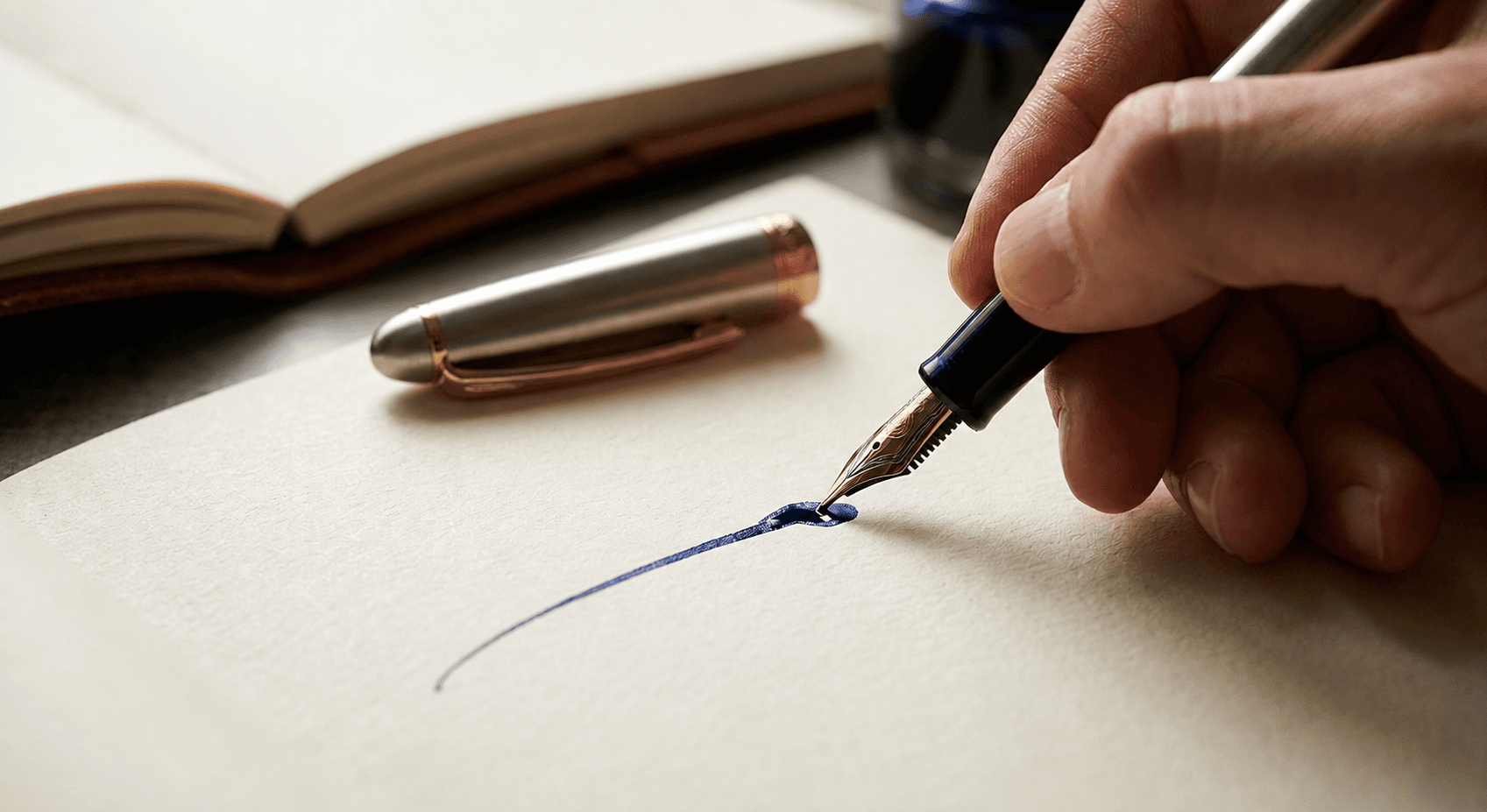
There is something deeply satisfying about writing by hand. The movement of the nib, the sound of it travelling across the page, the way liquid ink settles into the paper and each word takes shape. In a world of keyboards, screens and instant messages, putting pen to paper can feel almost like a precious ritual. And perhaps that is why, even today, people continue to fall in love with fine writing instruments.
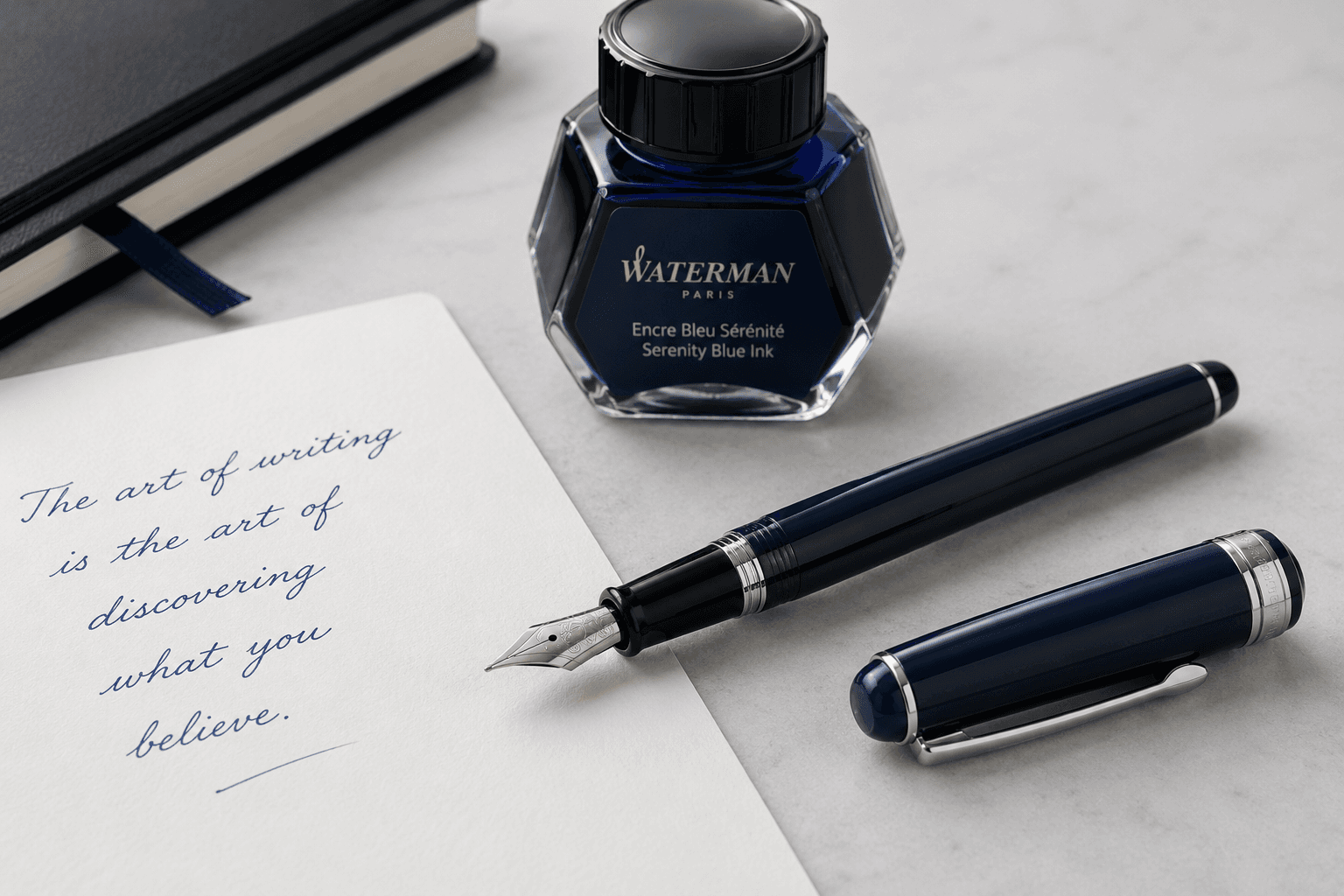
The origins of the fountain pen
Before the fountain pen came into being, writing with ink meant dipping a quill or nib into an inkwell, writing a little, then dipping it again. Although it was a familiar way to write, it was hardly convenient. This led inventors and communities around the world to explore the idea of creating a “reservoir pen” by putting the ink inside the writing instrument.
One early example comes from Fatimid Egypt, where a reservoir pen was reportedly made for Caliph Al-Mu'izz so that he could write without staining his hands or clothes. Centuries later, European inventors continued experimenting with pens that could hold and deliver their own ink. By the 17th and 18th centuries, reservoir pens were being described and used in Europe.

The idea behind a fountain pen is still quite simple. Instead of repeatedly dipping a nib into an inkwell, the pen carries its own supply of liquid ink inside its barrel. The ink travels through a small channel called the feed, which helps regulate its flow towards the nib. As the nib moves across the paper, the ink flows onto the page. Air moves back through the feed as ink leaves the reservoir, helping maintain a steady flow.
This principle of drawing ink from a reservoir and delivering it through the nib is often associated with the name “fountain pen”, although the exact etymology is not fully known.
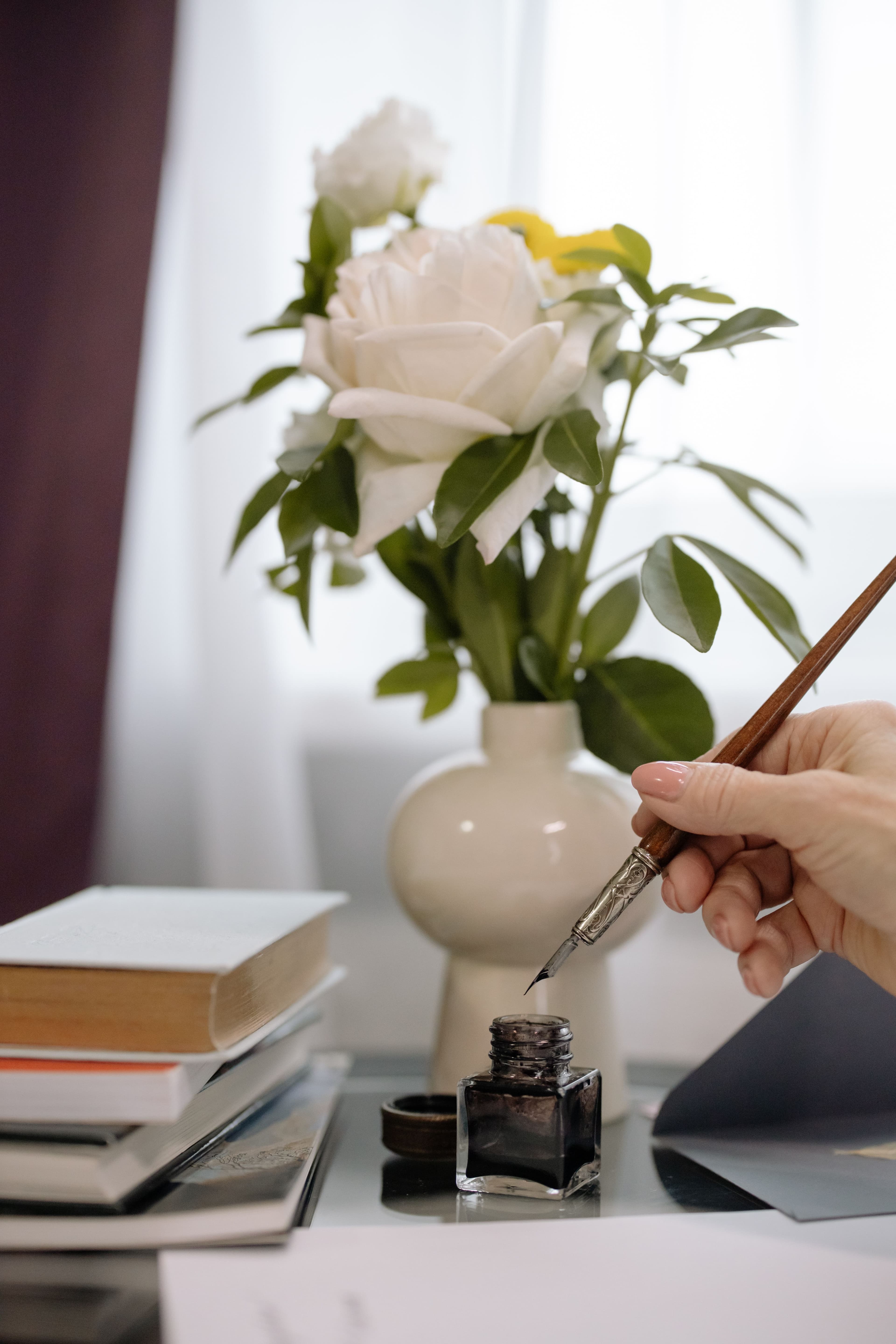
Through the 19th century, inventors continued working on nibs, feeds, materials, filling mechanisms and ways to prevent leaks. In 1827, Romanian inventor Petrache Poenaru received a French patent for a fountain pen with a barrel made from a large swan quill.
But early designs still had problems with inconsistent ink flow and leakage. The breakthrough came in 1883, when Lewis Edson Waterman introduced a revolutionary capillary feed system that solved these issues and popularized the modern fountain pen. Decades later, the writing landscape shifted again when inventors introduced the ballpoint.
By the 1960s, improvements in ballpoint pens had made them the preferred choice for casual everyday writing. They were convenient, portable, and required very little maintenance. Fountain pens gradually became less about convenience and more about the experience of writing.

The parts of a fountain pen
Although it might look simple, a good fountain pen is a sum of a few important parts.
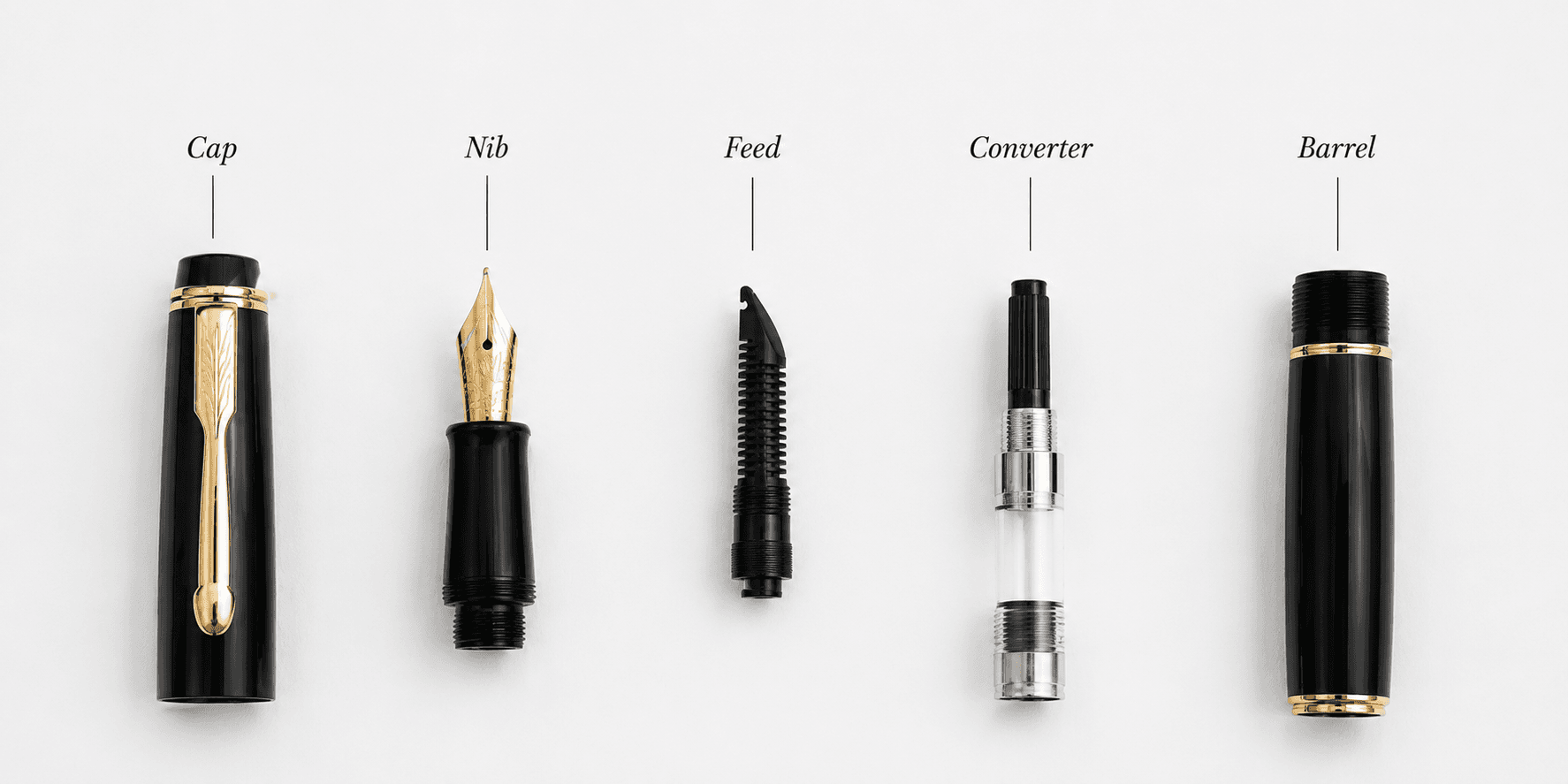
The barrel, nib, and cap are the parts you notice first. The barrel forms the body of the pen, the nib is what meets the paper and puts the ink onto the page, and the cap protects the nib when the pen is not in use.
Inside the barrel is where the ink is stored. Depending on the pen, it may be held in a cartridge, converter, or built-in reservoir. When you hold the pen ready to write, the ink moves towards the nib through the feed, a part inside the pen that controls the flow. The feed acts as a controlled pathway for both ink and air, allowing just enough ink to reach the nib while air moves back into the reservoir to take its place as you write. The ink then reaches the nib and flows onto the paper, creating the line that gives each fountain pen its character.
Choosing a fountain pen
The ideal pen for you depends on your needs, preferences, and style of writing. A good place to start is the nib. Fine nibs are suited to smaller, more precise writing, while medium and broad nibs create fuller lines. If you are new to fountain pens, a fine or medium nib can be a good place to begin.
Then think about how the pen feels in your hand. Its size, weight, shape, and grip can all make a difference, especially if you spend a lot of time writing. The filling system is another consideration. Cartridges are simple and convenient, while converters let you explore bottled inks and their wider range of colours.
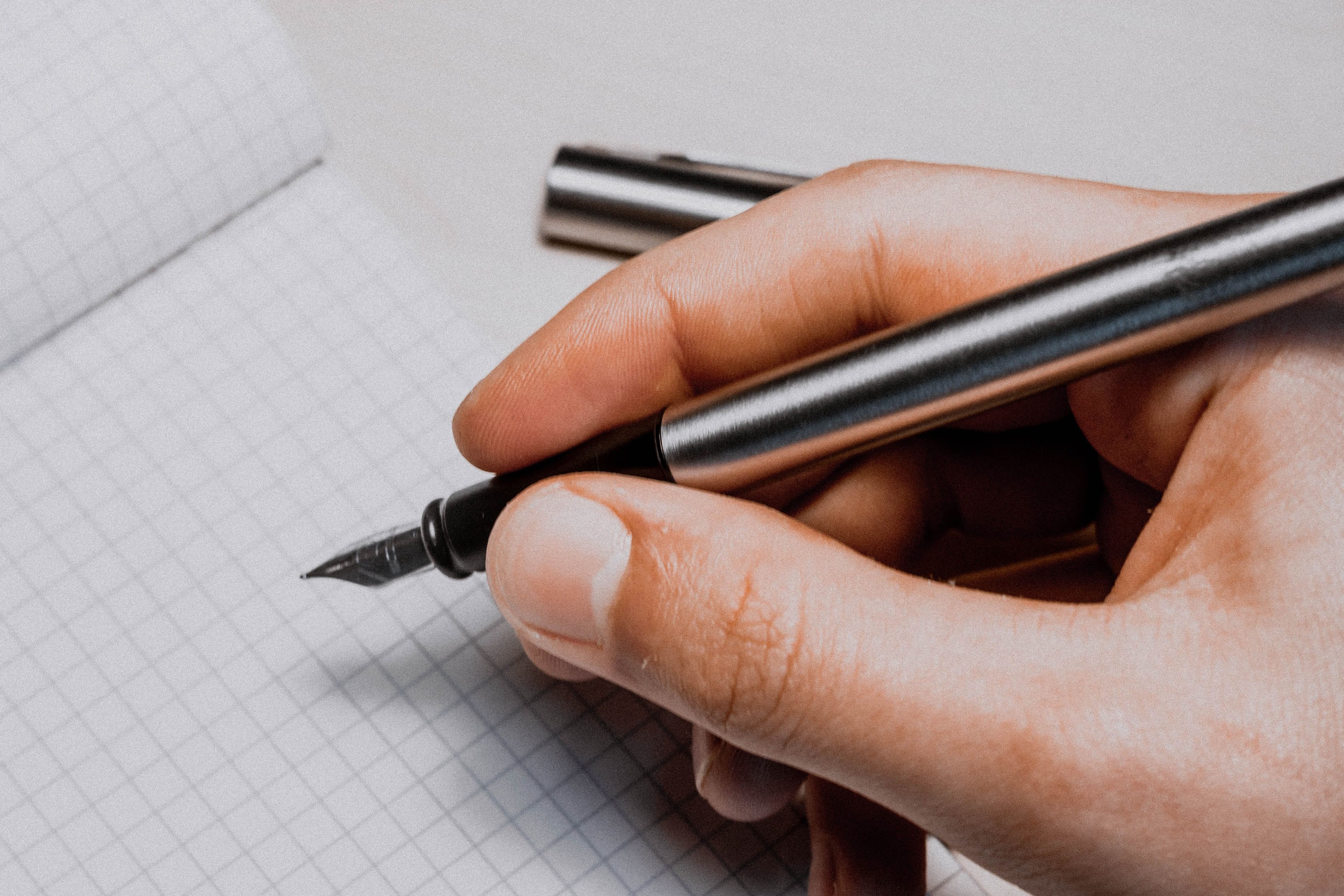
And finally, there is the simplest test of all. Pick up the pen. See how it feels. Write a few words. The right fountain pen is not necessarily the most expensive or the most elaborate one. It is the one that feels natural in your hand and makes you want to keep writing.

Caring for your fountain pen
With a little care, a good fountain pen can stay with you for years and become a familiar part of your everyday writing.
The most important thing is to keep the ink flowing cleanly. If a pen has been sitting unused for a while, or if you are changing from one ink to another, it may need to be cleaned according to the manufacturer's instructions. This helps prevent dried ink from affecting the flow.
Storing your pen in the right way is also important. Keep the cap securely closed when you are not writing, and avoid leaving the pen exposed for long periods. If you know you will not be using it for an extended time, check the manufacturer's recommendations for storing it.
The nib deserves a little care too. Avoid pressing down hard while writing. A fountain pen is designed to let the ink flow with a light touch, and excessive pressure can affect the nib.
And when it comes to ink, use ink made specifically for fountain pens. Different inks can behave differently, so it is always worth checking that an ink is suitable for your pen before filling it.
Fine writing, at Premier
For those who appreciate the art of writing, choosing the right pen can be as much about craftsmanship as it is about function.
At Premier, our selection of fine and premium writing instruments includes brands like Parker, Waterman, Cross, LAMY, Sailor, Diplomat, Opus, Penlux, Kaweco, Pilot and Pelikan, alongside premium inks and writing accessories.
No matter how much technology evolves or how the way we write changes, we believe the pleasure of putting pen to paper will always remain. Whether you're looking for your first fountain pen, adding to a collection, or searching for a thoughtful gift, explore our selection of fine writing instruments at your nearest Premier store.
All stories